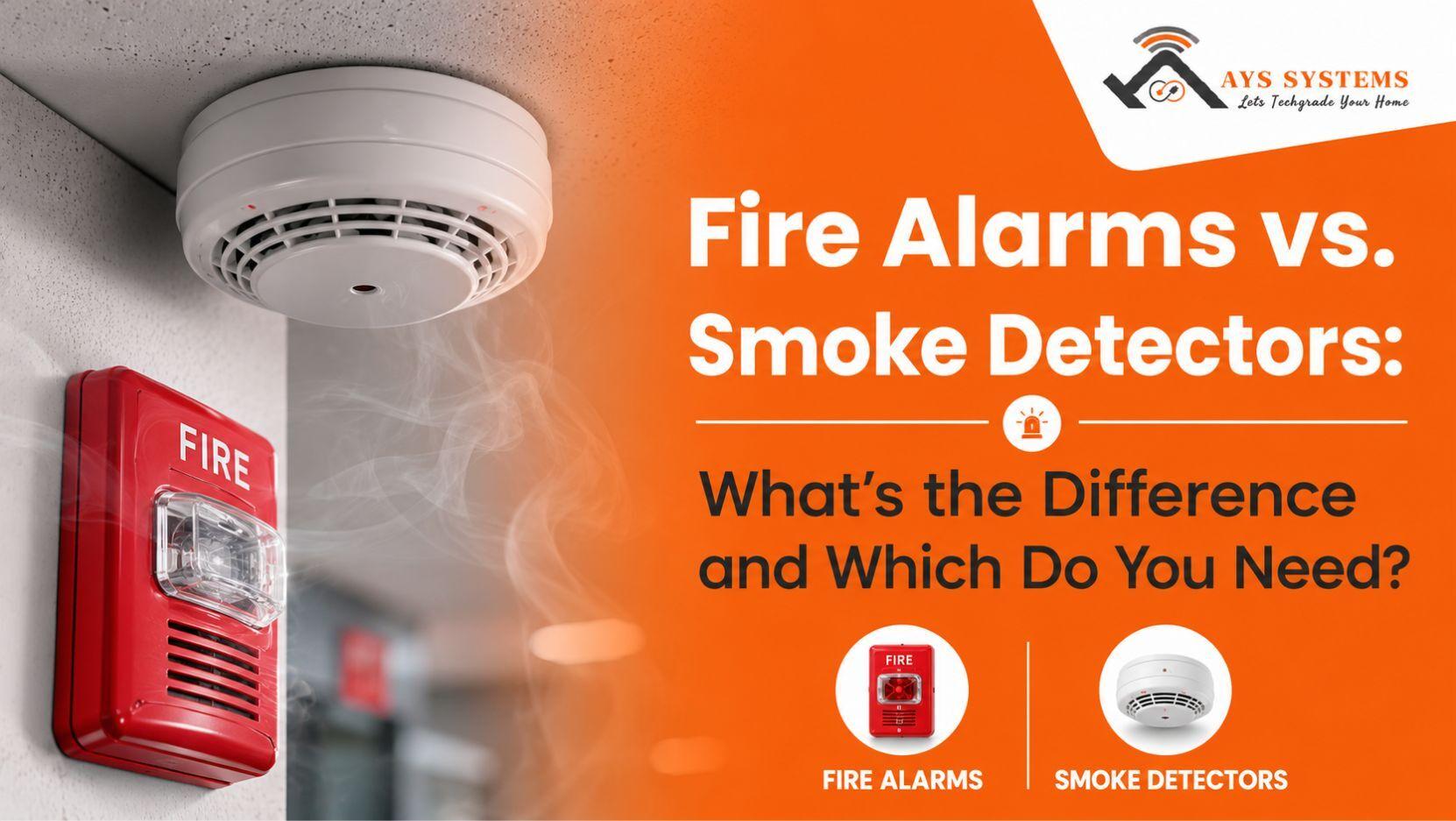
Fire safety is a critical consideration for every home and business, yet many people use the terms fire alarms and smoke detectors interchangeably. While both devices play an important role in protecting lives and property, they serve different functions within a comprehensive fire safety system. Understanding the difference between a smoke alarm, a standalone smoke detector, and a complete fire alarm system can help you choose the right level of protection for your property.
In this guide, we'll compare fire alarms and smoke detectors, explain how each works, and help you determine which option best suits your needs. We'll also discuss the importance of professional fire alarm installation, ongoing fire alarm maintenance, and how expert fire alarm system installation services from AYS System can help ensure reliable protection for your property.
What is a Fire Alarm System?
A fire alarm system is a network of interconnected devices designed to detect fire-related threats and alert building occupants immediately. Modern systems provide comprehensive protection through detection, notification, monitoring, and integration with other safety measures.
How Fire Alarm Systems Work
A complete fire alarm system consists of multiple components working together to detect hazards and initiate emergency responses.
Key components include:
- Fire alarm control panel
- Smoke and heat detectors
- Manual call points
- Sounders and visual alarms
- Monitoring devices
- Communication interfaces
When a detector identifies smoke, heat, or another fire-related condition, it sends a signal to the control panel. The system then activates alarms throughout the building and can notify a monitoring center if fire alarm monitoring services are enabled.
Types of Fire Alarm Systems
1. Conventional Systems
Conventional systems divide a building into zones, making them suitable for smaller properties where identifying the general location of an incident is sufficient.
2. Addressable Systems
Addressable systems identify the exact device that triggered the alarm, making them ideal for larger and more complex buildings.
3. Wireless Systems
Wireless fire alarm systems offer flexibility, faster installation, and minimal disruption during deployment.
Benefits of a Professional Fire Alarm Installation
Professional fire alarm installation provides:
- Faster emergency response
- Compliance with legal regulations
- Improved occupant safety
- Better property protection
- Reliable system performance
- Enhanced insurance compliance
What is a Smoke Detector?
A smoke detector is a device designed specifically to detect the presence of smoke and provide an early warning before a fire spreads.
How Smoke Detectors Detect Fire Risks
Smoke detectors use advanced sensing technology to identify airborne particles generated by combustion. Once smoke reaches a predetermined threshold, the device activates a local smoke alarm to alert occupants.
Their primary purpose is to provide early warning, allowing individuals to evacuate safely and take action before conditions worsen.
Different Types of Smoke Detectors
1. Ionization Smoke Alarms
Ionization detectors are highly effective at detecting fast-flaming fires that produce smaller combustion particles.
2. Photoelectric Smoke Alarms
Photoelectric alarms respond quickly to slow-smoldering fires that generate larger smoke particles.
3. Dual-Sensor Smoke Detectors
Dual-sensor devices combine both technologies, offering broader fire detection coverage and enhanced protection.
Why Smoke Detector Installation Matters
Proper smoke detector installation significantly improves detection effectiveness.
Important placement considerations include:
- Hallways
- Bedrooms
- Stairwells
- Living areas
- Escape routes
Common installation mistakes include placing detectors too close to kitchens, bathrooms, or ventilation systems, which may increase false alarms or reduce effectiveness.
Fire Alarm Systems vs. Smoke Detectors: Key Differences
Although both solutions contribute to fire safety, they differ in functionality, coverage, monitoring, and scalability. Understanding these distinctions helps property owners choose the most suitable protection.
1. Coverage Area
Smoke detectors typically protect individual rooms or small residential areas. A complete fire alarm system protects entire buildings through interconnected detection devices.
2. Alert and Notification Features
Smoke detectors generally activate a local alarm only. Fire alarm systems trigger building-wide alerts through sounders, visual indicators, and emergency notifications.
3. Monitoring Capabilities
Standalone smoke detectors usually lack monitoring functionality. Professional fire alarm systems often include fire alarm monitoring for 24/7 emergency response.
4. Integration with Other Safety Systems
A modern fire safety system can integrate with:
- Emergency lighting
- Evacuation systems
- Sprinkler systems
- Access Control Systems
- Security Alarm Systems
- CCTV Installation Services
5. Maintenance Requirements
Smoke detectors require routine testing and battery replacement. Larger systems require scheduled fire alarm maintenance performed by qualified specialists.
6. Cost and Scalability
Smoke detectors are generally less expensive initially. Fire alarm systems offer greater scalability, making them suitable for growing businesses and large facilities.
Fire Alarm System vs. Smoke Detector: Feature Comparison
The following comparison highlights the key differences between smoke detectors and fire alarm systems. Understanding their features, monitoring capabilities, and coverage areas can help you select the most effective fire safety solution for your property.
Feature | Smoke Detector | Fire Alarm System |
| Detection | ✓ | ✓ |
| Building-wide Alerts | Limited | Yes |
| Monitoring | No/Optional | Yes |
| Suitable for Large Properties | No | Yes |
| Integration | Limited | Extensive |
Do You Need a Smoke Detector or a Fire Alarm System?
Selecting the right fire protection solution depends on property size, occupancy, and risk level. Homes and businesses have unique requirements that determine whether detectors or complete systems are needed.
Best Solution for Residential Properties
A residential fire alarm system offers comprehensive protection for homeowners while meeting modern safety requirements.
- Single-Family Homes
Many homeowners benefit from interconnected smoke alarms combined with a residential fire alarm system for improved coverage.
- Apartments and Flats
Multi-unit residential buildings often require centralized fire detection and notification systems to ensure occupant safety.
Best Solution for Commercial Buildings
A commercial fire alarm system is essential for businesses that must protect employees, customers, and assets.
Suitable applications include:
- Offices
Comprehensive detection and evacuation support.
- Warehouses
Protection for inventory and operational continuity.
- Retail Stores
Improved customer safety and compliance.
- Educational Facilities
Rapid notification and coordinated emergency response.
When Should You Upgrade from Smoke Alarms to a Complete Fire Detection System?
As properties expand and safety requirements evolve, basic smoke alarms may no longer provide adequate protection. Upgrading ensures improved detection, compliance, and emergency response capabilities.
Warning Signs Your Current Protection is Not Enough
1. Growing Property Size
Expanding premises often require more advanced detection and notification capabilities.
2. Regulatory Requirements
Commercial properties frequently face stricter fire safety regulations that necessitate upgraded systems.
3. Multiple Occupancy Buildings
Shared buildings benefit from centralized alarm management and coordinated evacuation procedures.
4. Increased Fire Risks
Industrial processes, electrical equipment, and higher occupancy levels often justify a more sophisticated fire detection system.
Fire Alarm Maintenance and Monitoring: Why They Are Essential
Regular maintenance and continuous monitoring keep fire alarm systems operating effectively. These services help prevent failures, reduce false alarms, and ensure rapid responses during emergencies.
Benefits of Regular Fire Alarm Maintenance
Routine fire alarm maintenance provides several important advantages:
- Reliability
Ensures all components function correctly during emergencies.
- Compliance
Supports adherence to legal and insurance requirements.
- Reduced False Alarms
Regular servicing helps identify faults before they cause disruptions.
How Fire Alarm Monitoring Improves Safety
- 24/7 Monitoring
Continuous supervision ensures alarms are never ignored.
- Faster Emergency Response
Monitoring centers can notify emergency services immediately.
- Reduced Property Damage
Early intervention often minimizes fire spread and associated losses.
Building a Complete Fire Protection System
Effective fire protection relies on multiple interconnected safety measures working together. Combining detection, alarms, monitoring, and maintenance creates a stronger and more reliable defense against fire risks.
An effective fire protection system combines multiple layers of safety rather than relying on a single device.
A complete solution may include:
- Smoke detectors
- Fire alarms
- Fire alarm monitoring
- Fire alarm maintenance
- Emergency lighting
- Access Control Systems
- Intruder Alarm Systems
- Burglar alarm system installation
- Integrated Security Solutions
When these components work together, they create a robust fire detection system capable of protecting occupants, assets, and business operations. Proper integration improves visibility, response times, and overall safety performance.
Why Choose AYS System for Fire Alarm Installation Services in London?
AYS System delivers tailored fire safety solutions designed to meet the needs of residential and commercial properties. From installation to monitoring, every service focuses on reliability and compliance.
1. Experienced Fire Safety Specialists
AYS System delivers extensive expertise across residential and commercial fire protection projects.
2. Residential and Commercial Solutions
Solutions are tailored for homes, offices, warehouses, retail premises, and educational facilities.
3. Certified Installation and Maintenance
Qualified engineers ensure every system meets industry standards and compliance requirements.
4. Tailored Fire Detection Systems
Each installation is designed around specific building layouts and risk profiles.
5. Ongoing Support and Monitoring
Comprehensive support services include monitoring, testing, upgrades, and preventative maintenance.
Conclusion
Understanding the difference between smoke detectors and fire alarms is essential when selecting the right protection for your property. Smoke detectors provide valuable early warnings, while a complete fire alarm system delivers building-wide notification, monitoring, integration, and enhanced safety capabilities.
Residential properties may benefit from interconnected smoke alarms or a residential fire alarm system, while businesses often require a fully integrated commercial fire alarm system to meet safety and compliance requirements.
For reliable protection, professional assessment, installation, monitoring, and maintenance are critical to ensuring your system performs when it matters most.
Contact AYS System today for expert fire alarm installation, maintenance, monitoring, and fire detection system services in London. Our specialists can design a tailored solution that protects your people, property, and business with reliable and comprehensive fire safety measures.
FAQs
1. What is the difference between a fire alarm and a smoke detector?
A smoke detector identifies smoke and activates a local alarm, while a fire alarm system connects multiple devices to provide building-wide alerts, monitoring, emergency response coordination, and integration with other safety systems.
2. Do I need a fire alarm system if I already have smoke detectors?
Smoke detectors provide basic protection, but larger homes, commercial premises, and multi-occupancy buildings often require a complete fire alarm system for broader coverage, monitoring capabilities, and regulatory compliance.
3. Are smoke detectors legally required in residential properties?
Yes, most residential properties must have functioning smoke alarms installed in designated locations. Specific requirements vary based on property type, occupancy, and local building and fire safety regulations.
4. How much does fire alarm installation in London cost?
The cost depends on property size, system type, number of devices, monitoring requirements, and installation complexity. A professional assessment provides the most accurate quotation for your specific needs.
5. How often should a fire alarm system be maintained?
Fire alarm systems should be inspected regularly and serviced by qualified professionals according to applicable standards. Routine maintenance helps ensure reliability, compliance, and optimal performance.
6. Can smoke detectors be connected to a fire alarm system?
Yes, smoke detectors are commonly integrated into larger fire alarm systems. This allows detection signals to trigger building-wide alerts, monitoring services, and coordinated emergency response procedures.
7. What is the best fire detection system for commercial buildings?
The best solution depends on the building’s size, occupancy, risks, and regulatory requirements. Addressable commercial fire alarm systems are often preferred because they provide precise detection and advanced management features.
0 Comments